
The Catalyst Brief
Week of October 26–November 1, 2026
Editor's Note
Last week's reporting asked how much evidence a program needs before regulators and buyers commit. Genmab's petosemtamab halved the risk of death at a first interim look in Phase 3 head and neck cancer. The FDA proposed one licensing route for gene-editing products built patient by patient, and CMS moved to widen its Medicaid payment model. Astellas paid for an option on a drug not yet in humans, and BioMarin licensed a Phase 1/2 Fabry candidate. Anthropic's IPO filing put a molecular biology lab inside an AI company.
Top Stories
Genmab's Petosemtamab Halves the Risk of Death in a Phase 3 Head and Neck Cancer Trial
The Catalyst Brief – October 29, 2026
Summary:
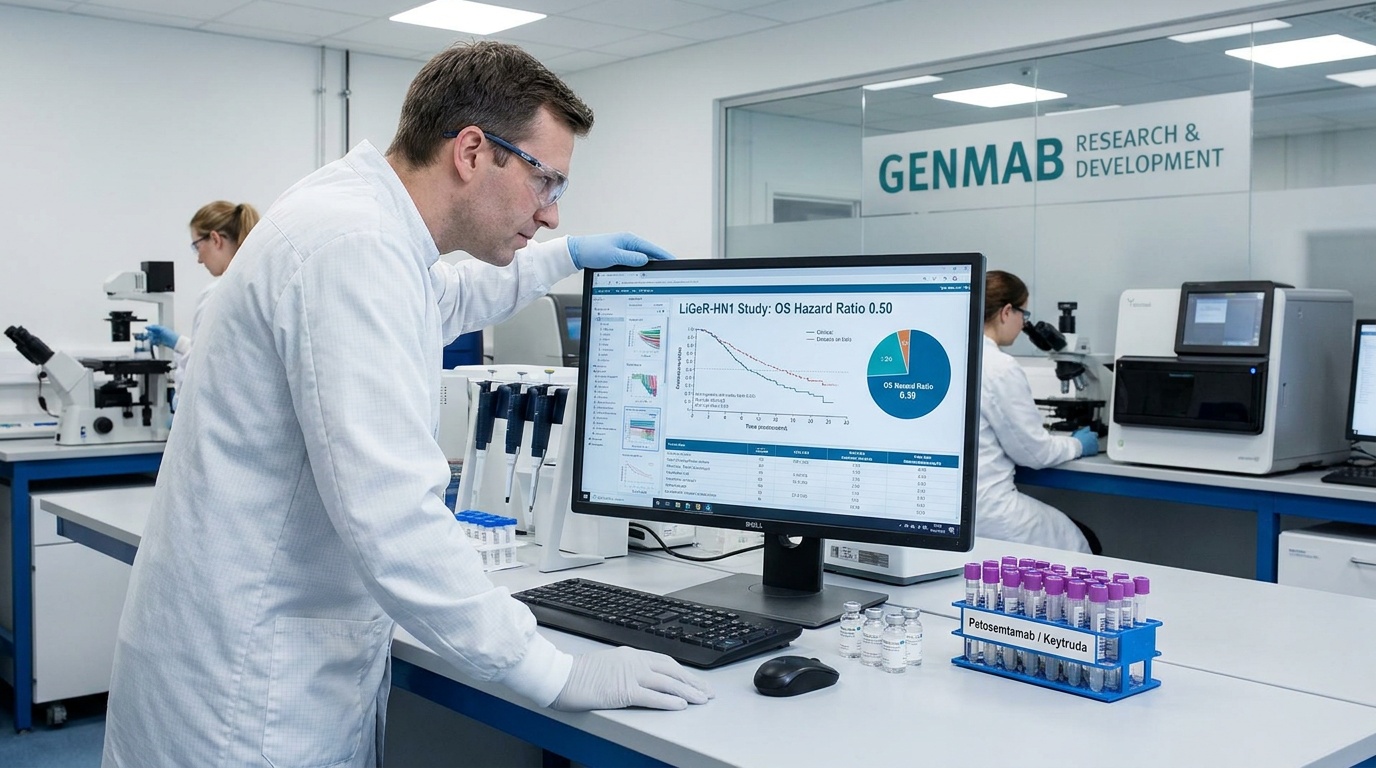
Genmab said on October 28 that LiGeR-HN1, its Phase 3 trial of petosemtamab with pembrolizumab, met both primary endpoints at the first interim analysis. The study enrolled patients with previously untreated, PD-L1-positive recurrent or metastatic head and neck squamous cell carcinoma, randomized 1:1 against pembrolizumab alone. Adding petosemtamab cut the risk of death by 50% (hazard ratio 0.50), and the odds of a tumor response were 3.17 times higher. No new safety signals appeared. Petosemtamab, a bispecific antibody that binds EGFR and LGR5, came to Genmab with Merus, whose tender offer closed in December 2025. Genmab will now engage regulators.
Why it matters:
Overall survival is the endpoint regulators weigh most heavily, and this benefit came against an active standard of care, not a placebo. Three further Phase 3 studies, in later-line head and neck cancer and in colorectal cancer, now start from firmer ground.
FDA Drafts a Single-Application Path for Individualized Gene-Editing Products
The Catalyst Brief – October 28, 2026
Summary:
On October 27, the FDA released draft guidance on how a sponsor can file one biologics license application (BLA) for an individualized human genome editing product that comes in multiple patient-specific variants. The document explains how to specify the allowed range of variation in the application and how to add new variants after licensure. It also covers potency and safety testing, manufacturing validation, labeling and naming. Comments are due November 27. The same day, CMS said it will widen its Cell and Gene Therapy Access Model beyond sickle cell disease and release a request for applications from manufacturers in the coming months.
Why it matters:
A product rebuilt for each patient has never fit a one-drug, one-license model. A single application that absorbs new variants after approval would make such programs repeatable, and the CMS step goes after the second barrier: Medicaid payment.
Astellas Takes an Option on Audax's Preclinical IL-12 Drug, Worth Up to $1.34 Billion
The Catalyst Brief – October 28, 2026

Summary:
Astellas and Audax Biosciences announced on October 28 an exclusive option and license agreement for DAX-044, an immune-targeted IL-12 antibody-cytokine fusion for solid tumors. Audax receives an upfront payment and a potential option-exercise payment totaling $285 million, plus up to $1.05 billion in development and commercial milestones and tiered double-digit royalties if the drug is approved. That puts total potential value at up to $1.34 billion before royalties. DAX-044 is still in IND-enabling development. Audax will fund it into a Phase 1 study expected to begin in 2027. If Astellas exercises the option, it takes sole responsibility for global development and commercialization.
Why it matters:
Astellas is paying for the right to wait. Audax carries the early clinical risk, and systemic toxicity has historically constrained IL-12 drugs, so human data will decide whether the option is used. Most of the headline value depends on that call.
BioMarin Licenses a Subcutaneous Fabry Enzyme Therapy for $70 Million Upfront
The Catalyst Brief – October 30, 2026
Summary:
BioMarin said on October 29 that it had licensed worldwide rights, excluding Korea, to HM15421/GC1134A from GC Biopharma and Hanmi Pharm. The long-acting enzyme replacement therapy for Fabry disease is given by subcutaneous injection and is in a Phase 1/2 trial. BioMarin pays $70 million upfront, and the two Korean companies are jointly eligible for up to $405 million more in development and commercial milestones, plus tiered royalties on net sales. After the current study, BioMarin takes sole responsibility for development, manufacturing and commercialization outside Korea. CEO Alexander Hardy said the candidate could reach patients beyond those with mutations amenable to Galafold.
Why it matters:
BioMarin says the drug could become the first subcutaneous enzyme replacement therapy for Fabry. Paired with Galafold, which serves only patients with amenable mutations, it would let one Fabry franchise cover a wider share of the disease.
Anthropic's IPO Filing Describes a Molecular Biology Lab and a Drug-Discovery Push
The Catalyst Brief – October 26, 2026
Summary:
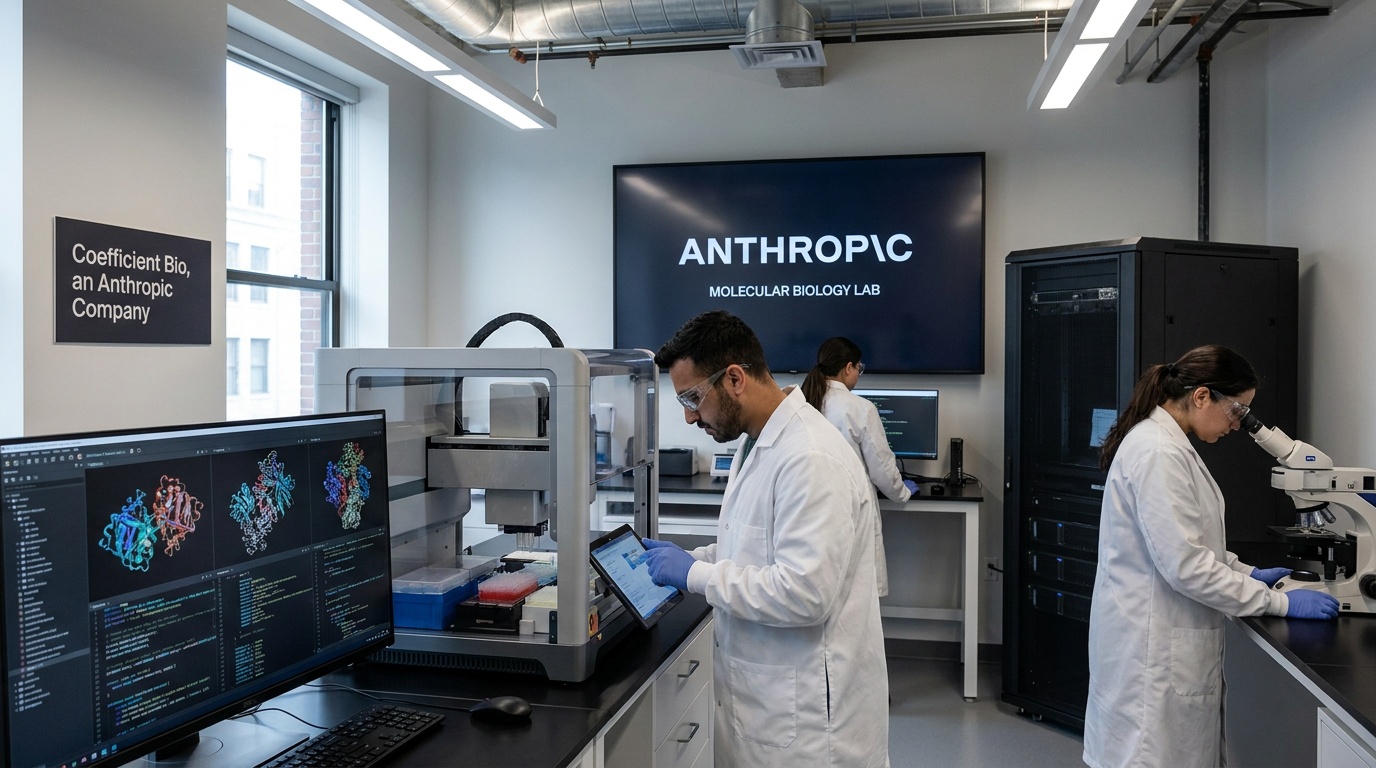
Anthropic filed its S-1 registration statement on October 26 and has applied to list on the Nasdaq Global Select Market under the symbol ANT, with no price range yet set. The company says Claude is used in drug discovery and development by customers, biotechnology partners and its own researchers. It has built a molecular biology lab and, in April, completed the acquisition of Coefficient Bio, a computational biology company. Its Model Hardware Standard lets AI agents operate equipment such as microscopes and liquid handlers. Its risk factors warn that any drug candidates would face lengthy, costly and uncertain development and may never generate revenue.
Why it matters:
The filing presents AI as support for scientists at each stage of development, and it states the regulatory exposure of running lab work directly. For drug developers, a model supplier is signaling it may also take part in discovery.
Market & Investment Pulse
Survival data still sets value. Genmab's 0.50 hazard ratio against an active comparator is the kind of result that supports a filing for an acquired late-stage asset.
Option structures shift early risk. Astellas committed up to $285 million in upfront and option payments for a preclinical asset, while Audax funds the work into Phase 1.
Licensing extends franchises. BioMarin's $70 million upfront buys a Phase 1/2 asset that complements a marketed product, with $405 million in milestones tied to progress.
Regulators are building repeatable routes. The FDA's draft would let one application cover many patient-specific gene-editing variants, which could make such programs easier to finance.
Payment policy is moving too. CMS plans to open its outcomes-based Medicaid model to therapies beyond sickle cell disease.
AI companies are moving closer to the lab. Anthropic's S-1 describes in-house biology work and lab-equipment control, along with the regulation that comes with them.
What to Watch Next Week
Public comments on the FDA's individualized gene-editing draft guidance, due November 27.
CMS's request for applications to expand the Cell and Gene Therapy Access Model, expected in the coming months.
Genmab's discussions with regulators and the full LiGeR-HN1 presentation at a future medical meeting.
Pricing terms for Anthropic's proposed offering, which the S-1 left blank.
Closing
Every story above draws on The Catalyst Brief's reporting, read for what it means for the probability of success. Read the full analysis at thecatalystbrief.com.
Thank you for reading The Catalyst Brief!
For deeper coverage, explore the full articles linked above. Feel free to forward this brief to colleagues or reply with feedback—your input helps us continue delivering biotech intelligence that improves decision-making and increases the probability of success.